



Introduction
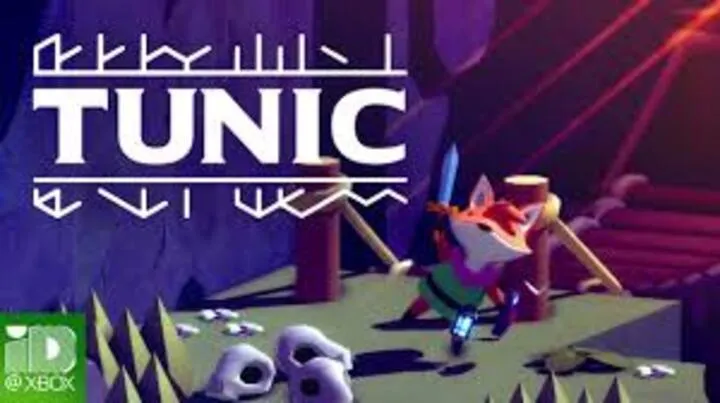
TUNIC is not a game that explains itself in a conventional way. At first glance, it appears to be a charming action-adventure title inspired by classic games, but beneath its surface lies a deeply layered system of hidden knowledge. The most important mechanic in TUNIC is not combat or exploration, but understanding.
Instead of directly teaching players how to play, TUNIC hides its rules inside fragmented manual pages written in an unfamiliar language. These pages are scattered throughout the world, and each one adds a piece to a much larger puzzle. Players are not just progressing through levels; they are learning how to interpret meaning.
This guide focuses specifically on how to decode the in-game manual in TUNIC and use it as a tool to unlock the game’s deepest secrets. Rather than offering general tips, it explores the mindset and process required to transform confusion into clarity.
1. Understanding the Role of the Manual
The in-game manual in TUNIC is not a decorative feature. It is the core system through which the game communicates with the player. Every mechanic, shortcut, and hidden rule is embedded within its pages.
Unlike traditional tutorials, the manual does not present information in a linear or fully readable way. Instead, it mimics the experience of reading a foreign instruction booklet. The player must interpret symbols, diagrams, and partial text to extract meaning.
This design shifts the responsibility of learning entirely onto the player. Progress is not gated by difficulty but by comprehension. The more you understand the manual, the more the game opens up.
2. Accepting Confusion as Part of the Process
One of the biggest barriers in TUNIC is the expectation of clarity. Players often become frustrated because they cannot immediately understand what the manual is trying to convey.
However, confusion is not a flaw—it is intentional. The game is designed to create moments of realization, where previously meaningless symbols suddenly make sense. These moments are the true rewards of the experience.
Instead of resisting confusion, players should embrace it. Treat every unclear page as a clue rather than a problem. Over time, patterns begin to emerge, and what once seemed incomprehensible becomes intuitive.
3. Recognizing Visual Language Over Text
Although much of the manual is written in a fictional script, the game rarely relies on text alone. Visual elements carry the majority of the information.
Diagrams, arrows, and layout design often reveal more than the words themselves. A single illustration can demonstrate a mechanic more clearly than a paragraph of text. Players who focus on visuals rather than attempting to translate every symbol gain a significant advantage.
Understanding this shifts how you read the manual. Instead of asking “What does this say?” the better question becomes “What is this showing me?”
4. Identifying Recurring Symbols and Patterns
As players collect more pages, certain symbols begin to repeat. These recurring elements are the foundation of the manual’s hidden language.
Patterns allow players to make connections between different sections. A symbol that appears in one context may help explain another page entirely. Over time, these connections form a mental framework that replaces the need for direct translation.
The key is observation. Rather than trying to decode everything at once, focus on recognizing familiar shapes and how they are used. Consistency is the game’s way of teaching without words.
5. Using Context to Infer Meaning
Context is one of the most powerful tools in decoding the manual. Even without understanding the language, players can infer meaning based on where and how information appears.
A page found near a specific area often relates to that location. Similarly, diagrams that include recognizable objects or enemies provide clues about their purpose. The surrounding environment acts as a reference point for interpretation.
By combining visual cues with environmental context, players can gradually build accurate assumptions. These assumptions eventually evolve into reliable knowledge.
6. Reinterpreting Old Pages with New Knowledge
One of the most important habits in TUNIC is revisiting previously collected pages. Early in the game, many pages seem incomplete or confusing. However, as you gain experience, their meaning changes.
A page that once appeared useless may suddenly reveal critical information. This recontextualization is a core part of the game’s design. Knowledge is cumulative, and understanding often comes from revisiting the past.
Players who regularly review their manual develop a deeper and more cohesive understanding of the game. This process turns scattered clues into a unified system.
7. Understanding the Game’s Meta-Layer of Secrets
TUNIC operates on multiple layers. Beyond basic mechanics, the manual also contains hints about hidden paths, secret mechanics, and deeper mysteries.
These elements are not meant to be discovered through random exploration alone. Instead, they require careful interpretation of the manual’s subtler details. Small visual cues or unusual layouts often indicate something beyond the obvious.
This meta-layer transforms the manual into more than a guide. It becomes a puzzle in itself, encouraging players to think beyond immediate gameplay.
8. Building a Personal Interpretation System
Every player approaches the manual differently. Because the game does not provide direct answers, interpretation becomes a personal process.
Some players focus on visual memory, while others create their own symbolic associations. Over time, each player develops a unique method of understanding the game’s language.
This individuality is part of what makes TUNIC special. There is no single correct way to decode the manual. What matters is building a system that works consistently for you.
9. The Role of Patience and Observation
Decoding the manual is not a fast process. It requires patience, attention to detail, and a willingness to slow down. Players who rush through the game often miss critical information.
Observation is more valuable than action. Taking the time to study a page, compare it with others, and reflect on its meaning leads to deeper insights.
This slower pace contrasts with many modern games, but it is essential to fully experiencing what TUNIC offers. The game rewards those who take the time to understand it.
10. Turning Knowledge into Mastery
Understanding the manual is only the first step. The true goal is applying that knowledge effectively within the game.
As players become more familiar with the manual, their confidence increases. Actions that once felt uncertain become deliberate. Exploration becomes more efficient, and hidden elements become easier to uncover.
This transition from confusion to mastery is the core progression of TUNIC. It is not about leveling up a character but about leveling up the player’s understanding.
Conclusion
TUNIC redefines how games communicate with players by transforming its manual into a central gameplay mechanic. Instead of providing direct instructions, it challenges players to interpret, connect, and discover meaning on their own. Decoding the manual is not just a task but an experience that mirrors the broader themes of curiosity and exploration.
By focusing on visual language, recognizing patterns, and embracing confusion, players can unlock the full depth of the game. The journey from not knowing to understanding is what makes TUNIC truly memorable. In the end, mastery in TUNIC is not measured by combat skill but by the ability to see what was hidden all along.