.webp)



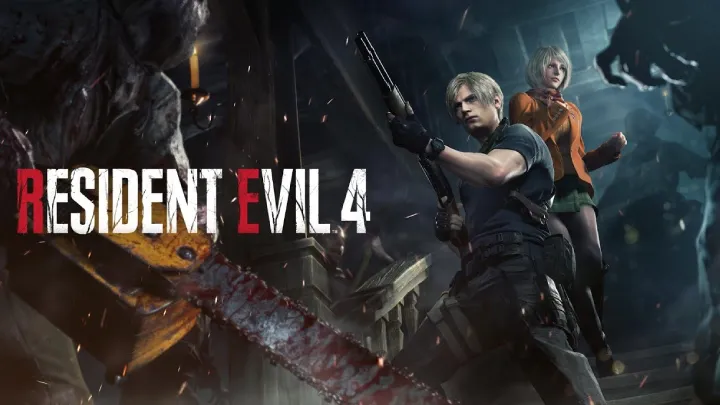
In Resident Evil 4, the knife isn’t merely a “starter melee.” It becomes the economic backbone for large parts of a playthrough because of how the game values time, accuracy, and resource consumption at the system level. The core issue is that the game doesn’t treat weapon choice as purely stylistic. It treats weapons as currencies with different exchange rates for: (1) damage per hit, (2) ammo conservation, (3) reload friction, and (4) control over enemy approach windows. The knife’s exchange rate is frequently better than other options.
That sounds abstract until you trace how the game repeatedly creates situations where the knife’s advantages stack: close-range pressure, enemy stun windows, and the way “one more hit” loops can be converted into ammo savings. Meanwhile, guns—especially early—cost you more than just bullets. They cost you positional stability and the mental budget of aiming under threat.
Knife efficiency is not only damage—it's risk management
The knife-first economy is essentially risk math. A knife attack trades raw lethality for reduced ammo consumption and often faster execution when enemies are already committed to an approach. But there’s more: the knife also changes your relationship to defensive actions like spacing and melee counters. Instead of thinking “how do I kill them safely with a gun,” you start thinking “how do I minimize the cost of each engagement.”
Why this becomes an “issue” rather than a “strategy”
Many games let you pick an optimal tool. The “issue” here is that the knife-first solution is not one option among many—it becomes the default solution for efficiency, and in some sections it becomes so reliable that other weapons feel like deliberate handicaps. When a single approach repeatedly beats alternatives on both efficiency and safety, the game’s design narrows the set of meaningful playstyles.
2) How the Game’s Value System Creates Knife Dominance
To understand why the knife is so strong, you must look at how Resident Evil 4 “prices” player decisions. Ammo is limited; healing is costly; and merchants convert your capacity to purchase into your ability to survive later. If one tool reduces ammo usage while maintaining kill reliability, the merchant economy will start to privilege it.
The knife-first economy is therefore a cascade: when you use the knife, you preserve gunpowder (bullets, handgun ammo, rifle ammo). Preserving gunpowder means fewer sales/less urgency at the merchant. Less urgency means you can buy upgrades at different thresholds—often later, when the risk of being underpowered becomes more severe. This produces a feedback loop that turns “knife is good” into “knife is the plan.”
Resource conversion: ammo → merchant value
The merchant is the game’s financial institution. Your savings influence whether you can immediately buy a weapon that fits the next threat type, or whether you can stockpile upgrades gradually. If the knife saves ammo during a segment, you effectively extend your purchasing power. That means the knife isn’t just a weapon; it’s a way of smoothing your economy.
Hidden friction matters: reloading and aim under pressure
Using guns often introduces additional friction beyond bullets themselves. Reload cycles create vulnerability windows; aim time creates exposure during enemy approach. In many close-range encounters, the knife reduces these exposure windows by letting you respond quickly to enemy positioning. Even if a gun deals higher damage per second, it can lose the “expected survival” contest because it makes you take longer to execute the kill safely.
3) Enemy Pressure Patterns: When Melee Becomes Mandatory Efficiency
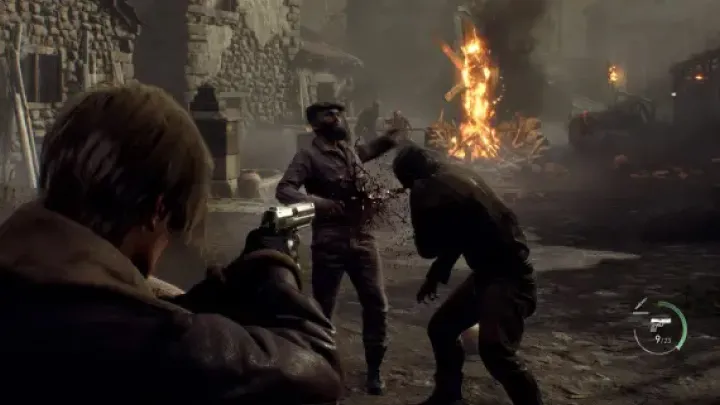
Knife dominance is strongest not because enemies are “weak,” but because they show up in predictable pressure patterns. Resident Evil 4 repeatedly places you in situations where enemies close distance quickly, where your accuracy is tested by movement and crowding, and where your decision to shoot triggers a chain of consequences: stagger behavior, enemy aggression response, and the likelihood of being surrounded.
In these patterns, melee is more than a style choice—it’s a control tool. The knife offers a way to end contact without spending ammo at the same rate as ranged weapons would. If the game’s encounter geometry funnels you toward knife range anyway, then the economic equation starts to heavily favor the knife.
Timing windows: why “one more hit” matters
Many enemies can be killed with a relatively small number of melee exchanges if you enter the interaction at the right moment (enemy commitment, your spacing, and whether you’re dealing with stunned posture). Those moments often occur naturally during combat, meaning the game is effectively giving you “free opportunities” to convert aggression into savings.
Crowding increases the cost of miss shots
When multiple enemies are present or when a single enemy’s actions create new threats mid-fight, missing shots becomes more than a damage loss. It becomes a survival loss: you remain exposed, you spend extra time aiming, and you may still need to engage with melee afterward. That increases the “expected cost” of ranged weapons, raising the knife’s relative efficiency.
- Knife: reduces ammo spend and often reduces exposure time per engagement.
- Gun: can end fights quickly, but missing or waiting increases exposure windows.
- Result: the game repeatedly turns “ranged” into “ranged until forced to melee.”
4) The Merchant Economy: Upgrades That Reinforce the Knife Path
The knife-first economy isn’t just about moment-to-moment combat. It becomes structural because the merchant system, upgrade pricing, and weapon availability create incentives that reinforce what you already started doing well. If you’re saving ammo by using the knife, you will often accumulate currency at a different pace than a player who spends more bullets.
That changes what you buy and when. In turn, those purchases determine your future combat options. If your early game behavior is knife-efficient, you may become the kind of player who can afford a stagger weapon, a damage upgrade, or a tactical tool that complements the knife loop. Even if you start purchasing guns later, you may still rely on the knife during close-range moments because the “default safe response” was established earlier.
Upgrade thresholds create behavioral locking
Many upgrades are not “minute differences”—they are thresholds that shift your combat experience. The knife-first economy doesn’t prevent upgrading; it changes the timing and order of upgrades. That timing can “lock in” the knife approach as your primary method until you reach a point where ranged weapons become more affordable in survival terms.
Why “spend more bullets for fun” doesn’t always work
It’s easy to say, “If you want variety, just use other weapons.” But because the knife-first economy interacts with healing and merchant availability, deviating from knife efficiency can carry a delayed penalty. You may feel fine for a while—then suddenly the game offers an encounter that punishes your reduced ammo surplus. The loss of future purchasing power can feel like a sudden wall rather than a gradual cost.
5) Micro-Mechanics: Parry, Timing, and the Knife as a Cognitive Shortcut
Beyond the raw numbers, the knife-first economy becomes dominant because it reduces cognitive load. When you know that the knife is a low-cost response, you commit to it more often—and that commitment improves your timing. Resident Evil 4 is a game where good outcomes depend on reading enemy animation transitions. If the knife solution is consistently “good enough,” it becomes the default read.
That default read is a cognitive shortcut. It changes how you interpret the game: instead of calculating “what’s the safest method,” you start thinking “how do I finish this exchange with minimal resource cost.” In practice, that means knife-first play may create a smoother mental loop than frequent ranged alternation, because ranged weapons require steadier aim and ammunition budgeting.
Knife-first play creates rhythm
When players repeatedly apply the knife in certain windows, they internalize a rhythm: approach, strike, reset spacing, repeat. That rhythm becomes a personal “combat script” that reduces the probability of panic. Panic is expensive; it leads to mis-aimed shots, unnecessary healing, and wasted merchant purchases on emergency solutions.
Defensive options become tied to melee range
In many close encounters, defensive decision-making becomes anchored to melee distance. If you’re trying to survive with guns alone, you might need to keep distance and land hits from afar. But if the environment and enemy behavior repeatedly push you close, then staying at optimal gun range becomes harder. The knife solves that by operating in the space the game gives you.
- Cognitive load ↓ when the knife is your default “safe response.”
- Rhythm improves because repeated patterns strengthen your timing.
- Survival improves indirectly through fewer panic decisions.
6) Why This Can Reduce Build Variety (Even for Skilled Players)
Here is the core tension: skilled players often want to demonstrate mastery through varied strategies—different weapons, different melee styles, different pacing. But if the knife-first economy is the dominant expected-value option, it doesn’t merely help beginners. It can shape even advanced play, because efficiency is still efficiency.
When the knife is a consistent best-response in many encounter types, players who attempt to “roleplay” with guns may experience a structural disadvantage. That disadvantage may not be obvious in a single fight; it shows up across a segment as resource scarcity, delayed upgrade timing, or healing depletion. Over long runs, the game’s efficiency pressure can reduce the practical freedom to experiment.
Variety vs. feasibility
Variety in design isn’t only about offering multiple weapons. It’s about whether multiple weapons are meaningfully feasible under the game’s risk economy. The knife-first issue suggests that for a significant portion of the game’s combat loop, feasibility skews heavily toward knife melee—especially in close-range chaos.
Skilled players still face the same math
Even if you can aim well, you still deal with the game’s pacing and enemy pressure. The knife’s strengths include fast execution and reduced ammunition cost. If those remain relevant, then “skill” increases your ability to use any weapon—but it does not remove the underlying incentives that make knife-first efficient.
7) The “Counterargument” Problem: “Just Use Other Weapons”
At this point, many players will object: “I use guns and I’m fine.” That objection is valid as a personal experience. However, it doesn’t fully refute the knife-first economy issue; it reframes it. Personal success does not mean the design does not create an optimal path—it means you are operating within the feasible subset of options you personally can afford.
Because the game is playable with many methods, you can absolutely win while ignoring the knife’s economic dominance. But the question is whether ignoring it is neutral, or whether it requires compensation elsewhere (careful aim, more conservative movement, tighter healing management, or earlier merchant spending). In other words: using other weapons may be possible, but it often demands compensations that reduce overall freedom.
Feasible doesn’t mean equivalent
The issue is not whether other strategies can succeed. The issue is whether they succeed with the same ease, without creating delayed penalties. The knife-first economy suggests there is a large gap between “can succeed” and “does so efficiently across typical encounters.”
Delayed penalty is the key player experience
Often, the cost of deviating from the knife-first plan is not immediate. It appears later when the game’s next segment demands resources you didn’t conserve. That delayed penalty creates a psychological feeling of “sudden difficulty,” even though it’s the consequence of earlier efficiency choices.
- Counterargument: “I can win with guns.”
- Rebuttal: “Winning is not the same as equal feasibility under the economy.”
- Implication: the knife-first path becomes the low-friction route.
8) Replay Value and Speedruns: How the Knife-First Economy Changes Play Intent
When a game creates a dominant strategy, replay value shifts. Instead of “each run can feel wholly different,” runs begin to feel like variations on a theme. You may still see different routes, but combat decision-making often converges: knife melee becomes the safety net you fall into when time and resources are on the line.
This is especially noticeable in runs where the objective is efficiency—faster clears, tighter resource management, or consistent execution. Knife-first play aligns well with those goals because it converts close-range conflict into resource preservation, reducing the amount of ammo expenditure that would otherwise require extra merchant visits or more frequent healing.
Speed intent favors consistency over experimentation
Speed and consistency don’t merely encourage fast movement; they encourage repeatable combat scripts. The knife-first economy supplies that script in many sections. The game’s geometry and enemy patterns often present similar close-range opportunities, so knife-first becomes a standardized response.
Replay pleasure can become “mastering one system” rather than “sampling many”
For some players, mastering the knife-first economy is deeply satisfying. For others, it reduces the sensation of exploring diverse solutions. This is not a universal truth; it is a consequence of how the economy compresses choice under pressure.
9) Design Responsibility: What the Game Could Have Done Differently
If we treat the knife-first economy as an issue, then the question becomes: what specific design changes could reduce dominance without destroying the game’s identity? Any change must preserve Resident Evil 4’s signature tension: close encounters, risk-based decision-making, and resource scarcity. But dominance can be softened by making melee/ranged tradeoffs more balanced across encounter types.
Rather than generic “nerf the knife,” you’d need targeted adjustments that affect expected value. For example: changing knife lethality thresholds for certain enemy states, altering drop patterns, making some encounters more punishable at knife range, or adjusting how often the game forces knife range versus gun range. The design goal would be to create more genuine decision diversity—so that using guns is not consistently the “higher cost but similar risk” option.
Balance levers (specific, not vague)
- Close-range counterplay: ensure some encounters punish rushing into knife distance more often.
- Melee opportunity variance: reduce how consistently knife-execution windows appear across enemy types.
- Resource exchange tuning: adjust how ammo scarcity interacts with enemy crowding and healing thresholds.
- Upgrade pacing: make merchant upgrades less tied to ammo conservation patterns.
Why this matters for long-term “choice feel”
Players don’t just want balance in the abstract. They want the sensation that switching tools is meaningful. When a single tool consistently solves the same kinds of problems cheaper and safer, “switching” becomes less than a choice—it becomes a roleplay constraint. That can still be fun, but it changes how the game communicates agency.
10) Conclusion: The Knife-First Economy as a Hidden “Rule of Play”
To conclude: Resident Evil 4 is celebrated for its combat tension, but a specific, deeper driver of that tension is the knife-first economy. The game’s value system, enemy pressure patterns, merchant timing, and micro-mechanics collectively create an optimal path where knife melee often delivers better expected survival per resource cost—especially in close-range chaos. This isn’t merely a tip for players; it’s a structural rule the design repeatedly enforces through incentives and delayed penalties.
When the knife-first economy dominates, it can compress feasible build variety and encourage repeated combat scripts. Players can still succeed with other strategies, but the equivalence of those strategies is not the same. The result is a particular kind of replay experience: mastery of a system that repeatedly rewards low-cost close-range solutions. If you love Resident Evil 4, this is part of its genius; if you want maximal variety, this is where the game narrows its own promise.
Ultimately, the knife-first economy is a hidden rule of play that turns “tactical awareness” into “economic awareness.” It asks players not only to survive encounters, but to survive them cheaply, consistently, and with a plan for the merchant’s future.